Dropper-rig bottom fishing from a Boat / Charter
Bigeye Tuna: After confirming bottom, lift slightly to avoid snags. Follow the skipper on sinker size and drop timing.
Waters: Southern Pacific coast, Okinawa & Nansei Islands, Deep sea
Fish
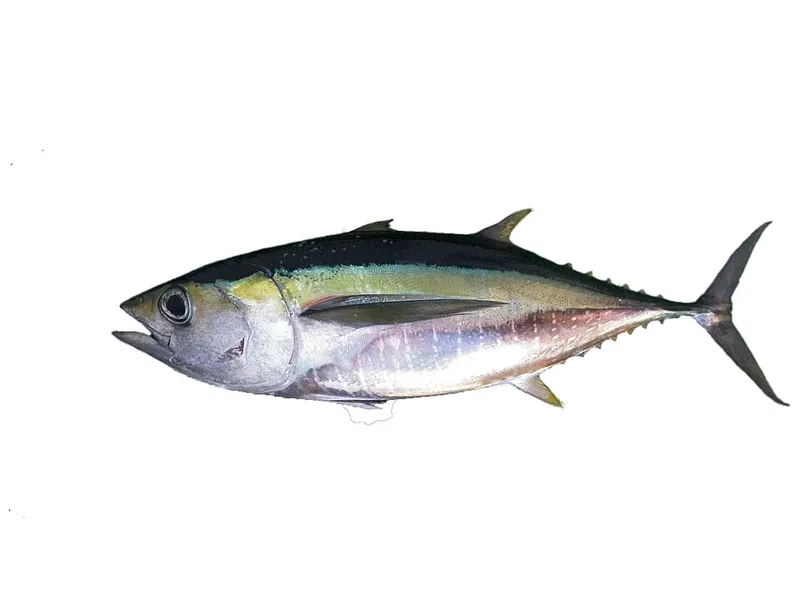
Thunnus obesus ・ Scombridae (Mackerels, Tunas, and Bonitos)
Months for Bigeye Tuna are a broad Japan-wide guide and shift with region, temperature and conditions; prefer local reports and rules.
Its Japanese name, mebachi, refers to its large eyes. It makes up about 30 percent of the tuna sold in Japan and is a standard choice for sashimi (raw fish) and sushi, with vivid red flesh.
Bigeye Tuna: After confirming bottom, lift slightly to avoid snags. Follow the skipper on sinker size and drop timing.
Waters: Southern Pacific coast, Okinawa & Nansei Islands, Deep sea
Dropper-rig starter kit ・ Kit total ¥14,000–36,000
Where the boat operator specifies sinker and rig sizes, follow those instructions.
Product links may be affiliate links. Prices move, so treat the ranges as a guide.
This fish is dangerous to handle bare-handed.
Histamine
Warm storage raises histamine-poisoning risk. Chill the catch immediately with ample ice; cooking is not a remedy.
Killing and carrying your catch — the taste is decided at the pier, not the kitchen
If retained for food, chill immediately and follow established local handling with thorough cooking.
Best eating: January–March, November, December
Before fishing, check prefectural fishery rules, regional size and season limits, protected areas, and harbour or charter retention rules.
Closed seasons and size limits — how to find the numbers, which differ by prefecture
Seasons and rules vary by place and time. Check current local information before fishing.