Dropper-rig bottom fishing from a Boat / Charter
Okhotsk Atka Mackerel: Remove slack after bottom contact, lift clear and work short movements. Release small fish carefully.
Waters: Hokkaido & Sea of Okhotsk, Sea of Japan
Fish
Pleurogrammus azonus ・ Hexagrammidae (Greenlings)
Months for Okhotsk Atka Mackerel are a broad Japan-wide guide and shift with region, temperature and conditions; prefer local reports and rules.
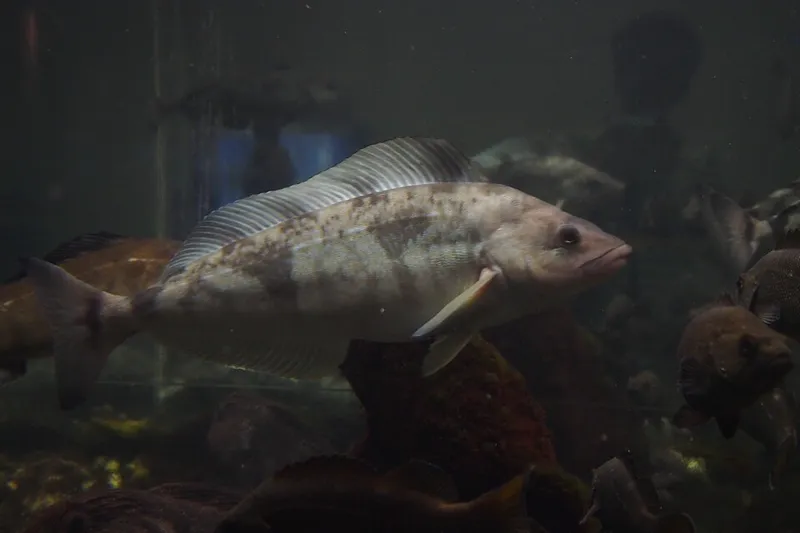
Spindle-shaped and slightly elongated, dark brown with faint dark crossbars and a deeply forked tail. Unusually, five lateral lines run along each side. Juveniles are blue-green and called aobokke; at 18-22 cm they become rousokubokke, or "candle hokke." The flesh spoils quickly, so most reaches market as a split, dried fillet.
In Hokkaido the fish come inshore in spring and autumn and can be taken from breakwaters. Chum them in and fish a hokke sabiki or a float rig underfoot; for water further out, cast a dropper rig.
Okhotsk Atka Mackerel: Remove slack after bottom contact, lift clear and work short movements. Release small fish carefully.
Waters: Hokkaido & Sea of Okhotsk, Sea of Japan
Dropper-rig starter kit ・ Kit total ¥14,000–36,000
Where the boat operator specifies sinker and rig sizes, follow those instructions.
Product links may be affiliate links. Prices move, so treat the ranges as a guide.
If retained for food, chill immediately and follow established local handling with thorough cooking.
Best eating: January, February, October–December
Before fishing, check prefectural fishery rules, regional size and season limits, protected areas, and harbour or charter retention rules.
Closed seasons and size limits — how to find the numbers, which differ by prefecture
Seasons and rules vary by place and time. Check current local information before fishing.