Dropper-rig bottom fishing from a Boat / Charter
Devil stinger: Remove slack after bottom contact, lift clear and work short movements. Release small fish carefully.
Waters: Southern Pacific coast, Seto Inland Sea, East China Sea & western Kyushu
Fish
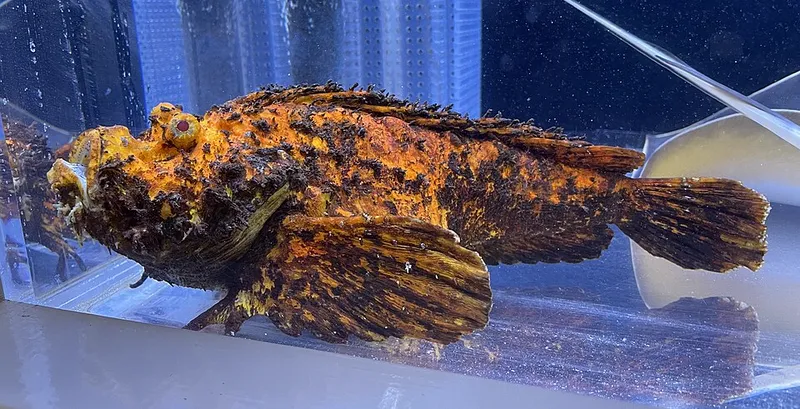
Inimicus japonicus ・ Synanceiidae (Stonefishes)
Months for Devil stinger are a broad Japan-wide guide and shift with region, temperature and conditions; prefer local reports and rules.
A knobbly fish with highly venomous spines in its dorsal fin. It buries itself in sand to ambush prey. Despite its looks, the white flesh is superb.
Devil stinger: Remove slack after bottom contact, lift clear and work short movements. Release small fish carefully.
Waters: Southern Pacific coast, Seto Inland Sea, East China Sea & western Kyushu
Dropper-rig starter kit ・ Kit total ¥14,000–36,000
Where the boat operator specifies sinker and rig sizes, follow those instructions.
Product links may be affiliate links. Prices move, so treat the ranges as a guide.
This fish is dangerous to handle bare-handed.
Venomous spines
Venomous dorsal spines cause severe pain. Do not touch with bare hands; seek medical advice after a sting.
Dangerous fish and animals — what to do when you are stung or bitten
If retained for food, chill immediately and follow established local handling with thorough cooking.
Best eating: January, February, October–December
Before fishing, check prefectural fishery rules, regional size and season limits, protected areas, and harbour or charter retention rules.
Closed seasons and size limits — how to find the numbers, which differ by prefecture
Seasons and rules vary by place and time. Check current local information before fishing.