Dropper-rig bottom fishing from a Boat / Charter
Japanese Sandfish: Remove slack after bottom contact, lift clear and work short movements. Release small fish carefully.
Waters: Sea of Japan, Hokkaido & Sea of Okhotsk
Fish
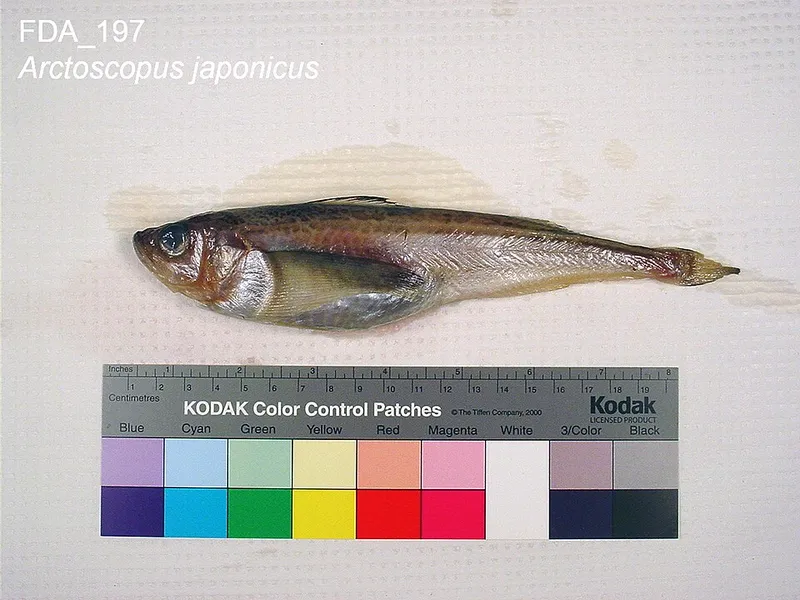
Arctoscopus japonicus ・ ハタハタ科
Months for Japanese Sandfish are a broad Japan-wide guide and shift with region, temperature and conditions; prefer local reports and rules.
Scaleless, with irregular brown blotches across the back, a large upturned mouth and conspicuously big pectoral fins. It normally lies buried on sandy-muddy bottoms 100-400 m down, moving into the shallows to spawn from late autumn into winter. Because that run coincides with thunderstorms it is also called kaminari-uo, the thunder fish. It is the base of shottsuru fish sauce, and its roe is prized as buriko.
When the fish crowd inshore to spawn around December, breakwaters in Akita and elsewhere on the Sea of Japan fill with sabiki anglers. No chum is needed, just drop the rig at your feet.
Japanese Sandfish: Remove slack after bottom contact, lift clear and work short movements. Release small fish carefully.
Waters: Sea of Japan, Hokkaido & Sea of Okhotsk
Dropper-rig starter kit ・ Kit total ¥14,000–36,000
Where the boat operator specifies sinker and rig sizes, follow those instructions.
Product links may be affiliate links. Prices move, so treat the ranges as a guide.
If retained for food, chill immediately and follow established local handling with thorough cooking.
Best eating: January, February, October–December
Before fishing, check prefectural fishery rules, regional size and season limits, protected areas, and harbour or charter retention rules.
Closed seasons and size limits — how to find the numbers, which differ by prefecture
Seasons and rules vary by place and time. Check current local information before fishing.