Months for Slime flounder are a broad Japan-wide guide and shift with region, temperature and conditions; prefer local reports and rules.
About
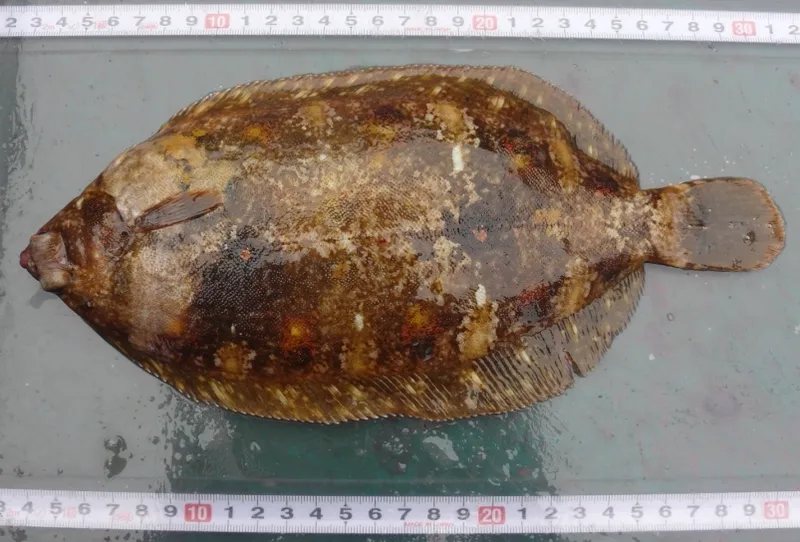
Coated in thick slime, which earns it the alternative name nameta-garei. In the Tohoku region it is essential in the simmered dish eaten to see out the old year.
Basics
Scientific name
Microstomus achne
Family
Pleuronectidae (Righteye Flounders)
Japanese name
ババガレイ
Kana
ばばがれい
Waters
Hokkaido & Sea of Okhotsk, Northern Pacific coast, Sea of Japan
Slime flounder: Retouch bottom gently to search changes in sand and mud. Ask the operator about releasing small fish.
Waters: Hokkaido & Sea of Okhotsk, Northern Pacific coast, Sea of Japan
Kit for this fish
Dropper-rig starter kit ・ Kit total ¥14,000–36,000
1.8 m dropper-rig rodShort rod for pier or boat dropper rigs; match sinker rating to local or boat instructions.¥3,500–14,000AdFind on AmazonFind on Rakuten
Spinning reel, size 2500The most versatile size for pier fishing: one reel covers sabiki, float fishing and eging.¥4,000–15,000AdFind on AmazonFind on Rakuten
PE braid, 1.0-gouFor wind fishing for cutlassfish and small jacks. The quarry has teeth, so always finish with wire or a heavy leader.¥1,500–5,000AdFind on AmazonFind on Rakuten
Two- or three-hook dropper rigReady-made bottom rig; choose hook size for the target and bait.¥300–1,200AdFind on AmazonFind on Rakuten
Cut fish bait (saury, mackerel, sardine)For hole fishing, cutlassfish and larger rockfish. Salting the flesh firms it so it stays on the hook.¥300–900AdFind on AmazonFind on Rakuten
Fishing pliers / hook removerEssential protection from venomous spines and sharp teeth. Most injuries happen when someone unhooks a fish bare-handed.¥800–4,000AdFind on AmazonFind on Rakuten
Cool box, 15-20 LFor carrying fish home cold. Take plenty of ice; in summer a poorly insulated box is not fit for the job.¥4,000–25,000AdFind on AmazonFind on Rakuten
Life jacket, adult (Japan Craft Inspection approved)The first thing to buy, and worn on piers, rocks and boats alike. Boat fishing requires the government-approved type marked with the cherry-blossom stamp.¥5,000–20,000AdFind on AmazonFind on Rakuten
Where the boat operator specifies sinker and rig sizes, follow those instructions.
Product links may be affiliate links. Prices move, so treat the ranges as a guide.