Dropper-rig bottom fishing from a Boat / Charter
Gnomefish: After confirming bottom, lift slightly to avoid snags. Follow the skipper on sinker size and drop timing.
Waters: East China Sea & western Kyushu, Southern Pacific coast, Sea of Japan
Fish
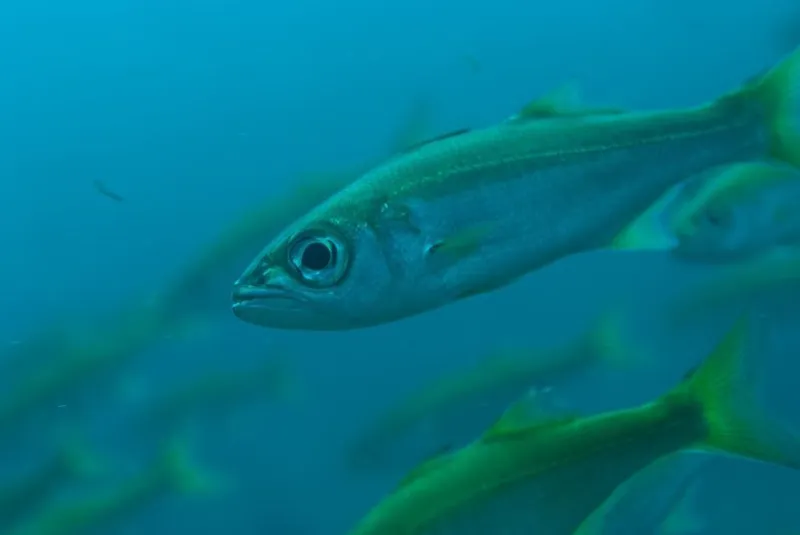
Scombrops boops ・ Scombropidae (Gnomefishes)
Months for Gnomefish are a broad Japan-wide guide and shift with region, temperature and conditions; prefer local reports and rules.
A deep-sea fish with large eyes and sharp teeth; adults live over rocky bottoms at 200 to 700 m. It is almost identical to the kuromutsu and is separated by lateral-line scale counts, 50 to 56 in mutsu against 60 to 68 in kuromutsu. The name is said to come from mutsukkoi, meaning greasy, for its rich flesh. Juveniles appear inshore in weed beds and even tide pools.
Boat anglers work 200 to 300 m with strips of squid for bait, while juveniles can be caught from shore on sabiki rigs.
Gnomefish: After confirming bottom, lift slightly to avoid snags. Follow the skipper on sinker size and drop timing.
Waters: East China Sea & western Kyushu, Southern Pacific coast, Sea of Japan
Dropper-rig starter kit ・ Kit total ¥14,000–36,000
Where the boat operator specifies sinker and rig sizes, follow those instructions.
Product links may be affiliate links. Prices move, so treat the ranges as a guide.
If retained for food, chill immediately and follow established local handling with thorough cooking.
Best eating: January–March, November, December
Before fishing, check prefectural fishery rules, regional size and season limits, protected areas, and harbour or charter retention rules.
Closed seasons and size limits — how to find the numbers, which differ by prefecture
Seasons and rules vary by place and time. Check current local information before fishing.