Dropper-rig bottom fishing from a Boat / Charter
Yellowback Seabream: Remove slack after bottom contact, lift clear and work short movements. Release small fish carefully.
Waters: Southern Pacific coast, Sea of Japan
Fish
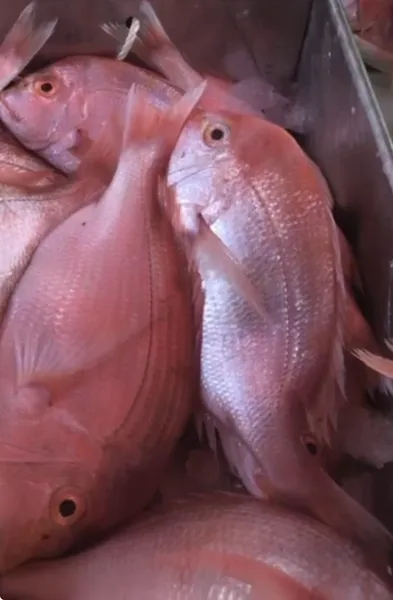
Dentex hypselosomus ・ Sparidae (Seabreams and Porgies)
Months for Yellowback Seabream are a broad Japan-wide guide and shift with region, temperature and conditions; prefer local reports and rules.
Smaller than the red sea bream at about 35 cm, with a strongly yellowish pink body, yellow running from the eye to the snout and upper jaw, and pale yellow blotches along the back. Unlike madai and chidai it has no molars, only conical teeth. It schools offshore at 50 to 200 m, and because longlines bring it up one after another it is also called renkodai.
Around Kanto it comes up on mid-depth boat trips near 100 m, taking krill or strips of squid alongside other bottom fish.
Yellowback Seabream: Remove slack after bottom contact, lift clear and work short movements. Release small fish carefully.
Waters: Southern Pacific coast, Sea of Japan
Dropper-rig starter kit ・ Kit total ¥14,000–36,000
Where the boat operator specifies sinker and rig sizes, follow those instructions.
Product links may be affiliate links. Prices move, so treat the ranges as a guide.
If retained for food, chill immediately and follow established local handling with thorough cooking.
Best eating: January, February, October–December
Before fishing, check prefectural fishery rules, regional size and season limits, protected areas, and harbour or charter retention rules.
Closed seasons and size limits — how to find the numbers, which differ by prefecture
Seasons and rules vary by place and time. Check current local information before fishing.