Bait-cage casting from a Breakwater / Pier
Pacific Bluefin Tuna: Use current lines and birds to anticipate the school. The rig is heavy, so check behind before every cast.
Waters: Northern Pacific coast, Southern Pacific coast, Sea of Japan
Fish
Thunnus orientalis ・ Scombridae (Mackerels, Tunas, and Bonitos)
Months for Pacific Bluefin Tuna are a broad Japan-wide guide and shift with region, temperature and conditions; prefer local reports and rules.
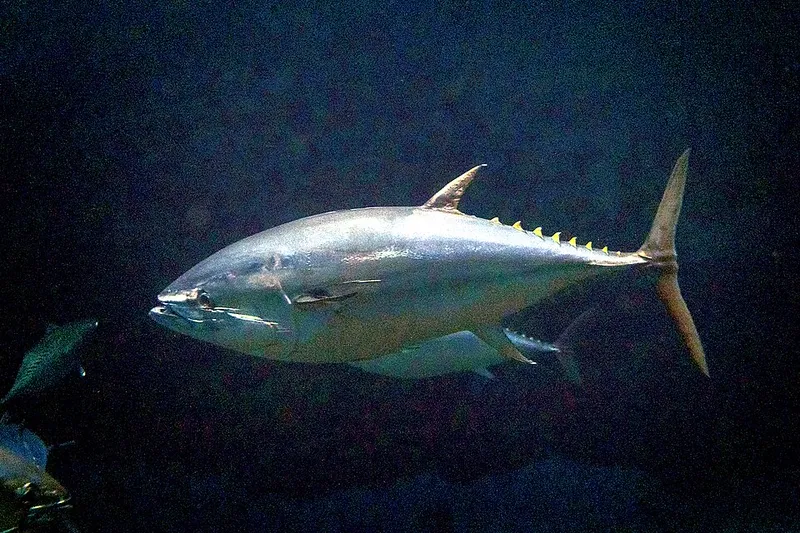
The largest of the tunas, known in Japan as hon-maguro, the true tuna. It passes 3 m and 400 kg, with a deep navy back and silver-grey belly, and large fish are said to reach 70-90 km/h. Among tunas it has the shortest pectoral fin, which does not reach the second dorsal - the key to telling it apart. Juveniles carry rows of dark bars on the flanks and are called yokowa.
Pacific Bluefin Tuna: Use current lines and birds to anticipate the school. The rig is heavy, so check behind before every cast.
Waters: Northern Pacific coast, Southern Pacific coast, Sea of Japan
Bait-cage casting kit ・ Kit total ¥26,000–68,000
The heavy rig demands head and eye protection plus generous casting clearance.
Product links may be affiliate links. Prices move, so treat the ranges as a guide.
This fish is dangerous to handle bare-handed.
Histamine
Warm storage raises histamine-poisoning risk. Chill the catch immediately with ample ice; cooking is not a remedy.
Killing and carrying your catch — the taste is decided at the pier, not the kitchen
If retained for food, chill immediately and follow established local handling with thorough cooking.
Best eating: September–December
Pacific bluefin recreational fishing is nationally regulated. Advance notification, size-based retention, catch reporting and in-season closures apply; check the Fisheries Agency bluefin page on the day of fishing.
Closed seasons and size limits — how to find the numbers, which differ by prefecture
Seasons and rules vary by place and time. Check current local information before fishing.