Bait-cage casting from a Breakwater / Pier
Pacific Herring: Use current lines and birds to anticipate the school. The rig is heavy, so check behind before every cast.
Waters: Hokkaido & Sea of Okhotsk, Sea of Japan
Fish
Clupea pallasii ・ ニシン科
Months for Pacific Herring are a broad Japan-wide guide and shift with region, temperature and conditions; prefer local reports and rules.
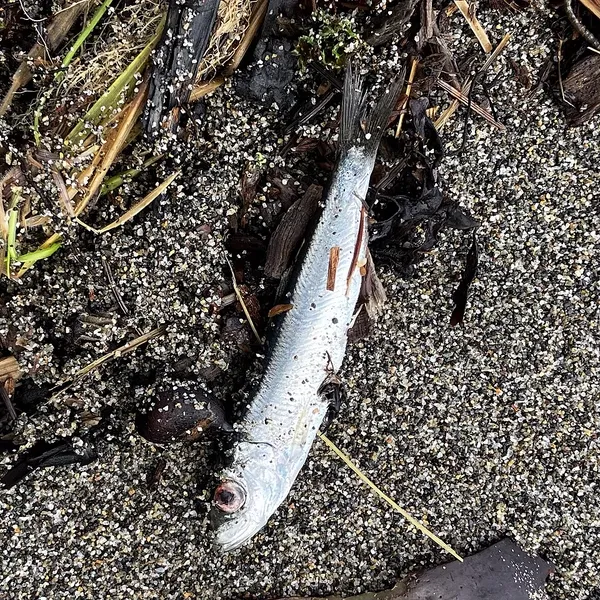
About 30-35 cm long, blue-black above and silvery white below. Unlike the sardine it has no row of black spots on the flank, and hard keeled scales line the edge of the belly. In the spawning season milt once turned stretches of the Hokkaido coast milky white, a run called kuki. The eggs become kazunoko and the bodies are dried into migaki-nishin.
In Hokkaido the target is kuki, the spawning run inshore from late January into spring. Anglers work harbours with sabiki rigs, jig-sabiki or small lures. Rarely caught further south.
Pacific Herring: Use current lines and birds to anticipate the school. The rig is heavy, so check behind before every cast.
Waters: Hokkaido & Sea of Okhotsk, Sea of Japan
Bait-cage casting kit ・ Kit total ¥26,000–68,000
The heavy rig demands head and eye protection plus generous casting clearance.
Product links may be affiliate links. Prices move, so treat the ranges as a guide.
This fish is dangerous to handle bare-handed.
Histamine
Warm storage raises histamine-poisoning risk. Chill the catch immediately with ample ice; cooking is not a remedy.
Killing and carrying your catch — the taste is decided at the pier, not the kitchen
If retained for food, chill immediately and follow established local handling with thorough cooking.
Best eating: January–March
Before fishing, check prefectural fishery rules, regional size and season limits, protected areas, and harbour or charter retention rules.
Closed seasons and size limits — how to find the numbers, which differ by prefecture
Seasons and rules vary by place and time. Check current local information before fishing.