Months for Temperate Scad are a broad Japan-wide guide and shift with region, temperature and conditions; prefer local reports and rules.
About
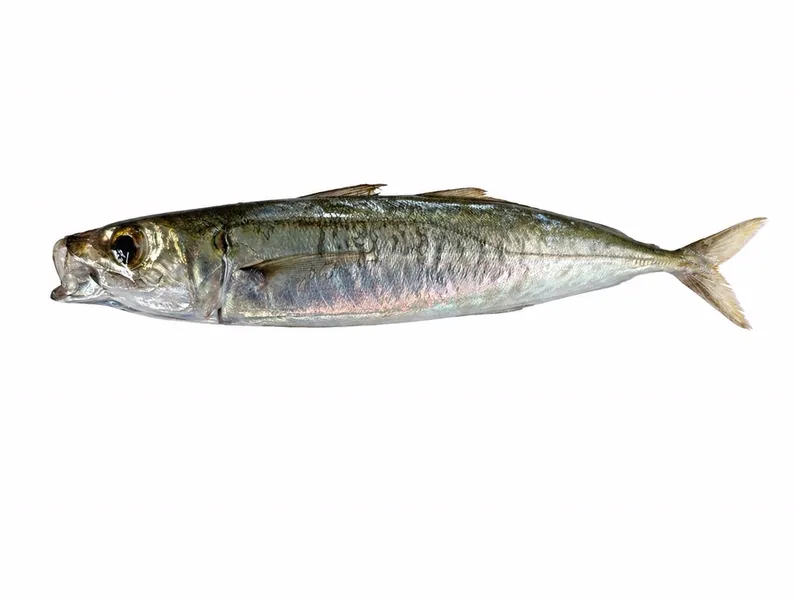
A warm-water scad, slimmer than the Japanese Horse Mackerel. On the Izu Islands it is the main ingredient for kusaya, a pungent fermented dried fish.
Basics
Scientific name
Decapterus muroadsi
Family
Carangidae (Jacks)
Japanese name
ムロアジ
Kana
むろあじ
Waters
Southern Pacific coast, East China Sea & western Kyushu, Okinawa & Nansei Islands
Size
30 cm (max 50 cm)
Time of day
Dawn, Dusk
Depth (tana)
Surface to mid-water, setting float depth to the travelling school.
Ad slot
How to catch it
A sabiki and cage-rig target from breakwaters and rocky shores in the Izu Islands, fished with minced-shrimp chum mainly from May to October. Use a leader of 1-go or heavier, as lighter line gets cut off.
Temperate Scad: Use current lines and birds to anticipate the school. The rig is heavy, so check behind before every cast.
Waters: Southern Pacific coast, East China Sea & western Kyushu, Okinawa & Nansei Islands
Kit for this fish
Bait-cage casting kit ・ Kit total ¥26,000–68,000
4.5 m distance-casting float rodDistance-casting float rod rated for a bait cage and float.¥9,000–30,000AdFind on AmazonFind on Rakuten
Spinning reel, size 4000-5000For shore jigging. A smooth drag under a running fish matters more than anything here, so this is not the place to economise.¥10,000–35,000AdFind on AmazonFind on Rakuten
Nylon line, 5-gou (about 20 lb)Main line for live-bait fishing, giving margin once something large is on.¥800–2,500AdFind on AmazonFind on Rakuten
Distance bait-cage and float rigCage, float and boom assembly; keep the weight within the rod rating.¥1,200–4,000AdFind on AmazonFind on Rakuten
Okiami krill (raw or boiled)The hook bait for float and fukase fishing. Boiled stands up to bait thieves; raw gets more bites.¥400–1,200AdFind on AmazonFind on Rakuten
Groundbait mix for chummingPowder mixed with krill so the chum throws well. Changing its density and stickiness delivers the chum to the depth you want.¥500–1,500AdFind on AmazonFind on Rakuten
Rope bucket for drawing seawaterUsed to rinse hands and chum and to keep fish alive. It is also how you leave the pier clean.¥800–2,500AdFind on AmazonFind on Rakuten
Cap and polarised sunglassesAlso safety equipment, protecting your eyes from a flying rig. Polarised lenses additionally let you read the bottom.¥2,000–20,000AdFind on AmazonFind on Rakuten
Life jacket, adult (Japan Craft Inspection approved)The first thing to buy, and worn on piers, rocks and boats alike. Boat fishing requires the government-approved type marked with the cherry-blossom stamp.¥5,000–20,000AdFind on AmazonFind on Rakuten
The heavy rig demands head and eye protection plus generous casting clearance.
Product links may be affiliate links. Prices move, so treat the ranges as a guide.