Bait-cage casting from a Breakwater / Pier
Japanese flyingfish: Use current lines and birds to anticipate the school. The rig is heavy, so check behind before every cast.
Waters: Southern Pacific coast, East China Sea & western Kyushu, Sea of Japan
Fish
Cypselurus agoo ・ トビウオ科
Months for Japanese flyingfish are a broad Japan-wide guide and shift with region, temperature and conditions; prefer local reports and rules.
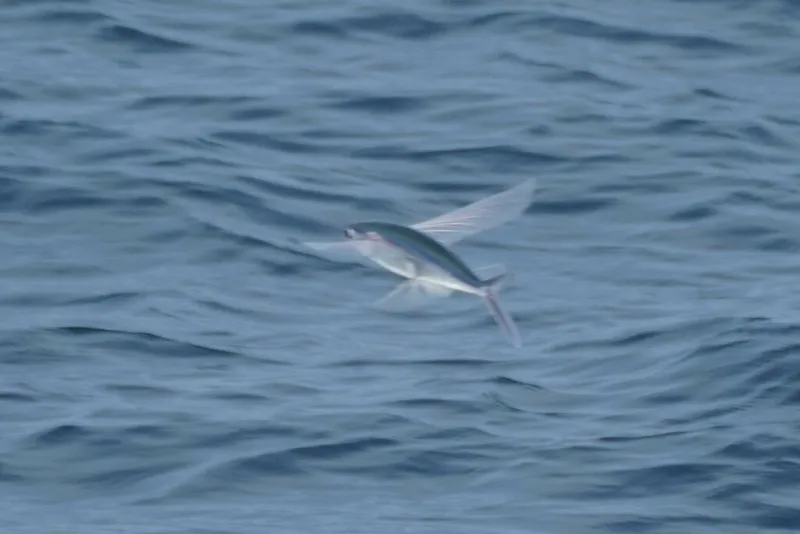
It glides just above the waves on hugely enlarged, wing-like pectoral fins, usually covering about 100 m and up to nearly 600 m in large individuals. The tail fin is V-shaped with a markedly longer lower lobe. Indigo above and white below, it grows to around 30-40 cm. It lays sticky eggs on drifting wood and seaweed, and dried and roasted it yields ago-dashi, a prized soup stock.
Not a fish anglers usually target. When a school comes close to shore it can be taken from breakwaters by working the surface with a float rig of the kind used for halfbeak, or with a sabiki rig.
Japanese flyingfish: Use current lines and birds to anticipate the school. The rig is heavy, so check behind before every cast.
Waters: Southern Pacific coast, East China Sea & western Kyushu, Sea of Japan
Bait-cage casting kit ・ Kit total ¥26,000–68,000
The heavy rig demands head and eye protection plus generous casting clearance.
Product links may be affiliate links. Prices move, so treat the ranges as a guide.
This fish is dangerous to handle bare-handed.
Histamine
Warm storage raises histamine-poisoning risk. Chill the catch immediately with ample ice; cooking is not a remedy.
Killing and carrying your catch — the taste is decided at the pier, not the kitchen
If retained for food, chill immediately and follow established local handling with thorough cooking.
Best eating: September–December
Before fishing, check prefectural fishery rules, regional size and season limits, protected areas, and harbour or charter retention rules.
Closed seasons and size limits — how to find the numbers, which differ by prefecture
Seasons and rules vary by place and time. Check current local information before fishing.