Mountain-stream bait fishing from a River / Mountain stream
Masu Salmon: Feed the bait from upstream and let it travel at current speed without tightening the line. Check opening dates and permits.
Waters: Rivers & lakes
Fish
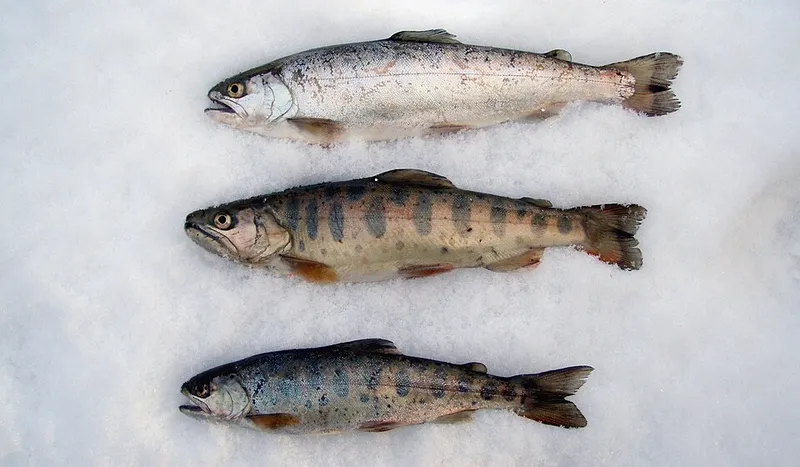
Oncorhynchus masou masou ・ Salmonidae (Salmons, Trouts, and Whitefishes)
Months for Masu Salmon are a broad Japan-wide guide and shift with region, temperature and conditions; prefer local reports and rules.
A row of oval parr marks runs along each side, with small black spots scattered over the back. Look-alikes are sorted by their spots: crimson dots mean amago, white spots mean the whitespotted char, and yamame has neither. It reaches about 20 cm and holds the water just downstream of the char's headwater zone. It is the stream-resident form of the cherry salmon; those that run to sea and grow large become sakuramasu.
The emblem of mountain-stream angling. Most rivers open in March and close from October. Bait, lures, tenkara (traditional Japanese fly fishing) and Western fly tackle all work, and a day licence is required.
Masu Salmon: Feed the bait from upstream and let it travel at current speed without tightening the line. Check opening dates and permits.
Waters: Rivers & lakes
Stream bait-fishing starter kit ・ Kit total ¥13,000–35,000
Before buying tackle, confirm the river permit, season and allowed bait and hooks.
Product links may be affiliate links. Prices move, so treat the ranges as a guide.
Food use varies locally. Check harvest rules and water quality, avoid raw consumption and cook thoroughly.
Best eating: March–June
Inland rules are water-specific. Check the fishery cooperative and prefecture for day or annual permits, closed seasons, minimum sizes, tackle, harvest and release rules.
Closed seasons and size limits — how to find the numbers, which differ by prefecture
Seasons and rules vary by place and time. Check current local information before fishing.