Mountain-stream bait fishing from a River / Mountain stream
Rainbow Trout: Feed the bait from upstream and let it travel at current speed without tightening the line. Check opening dates and permits.
Waters: Rivers & lakes
Fish
Oncorhynchus mykiss ・ Salmonidae (Salmons, Trouts, and Whitefishes)
Months for Rainbow Trout are a broad Japan-wide guide and shift with region, temperature and conditions; prefer local reports and rules.
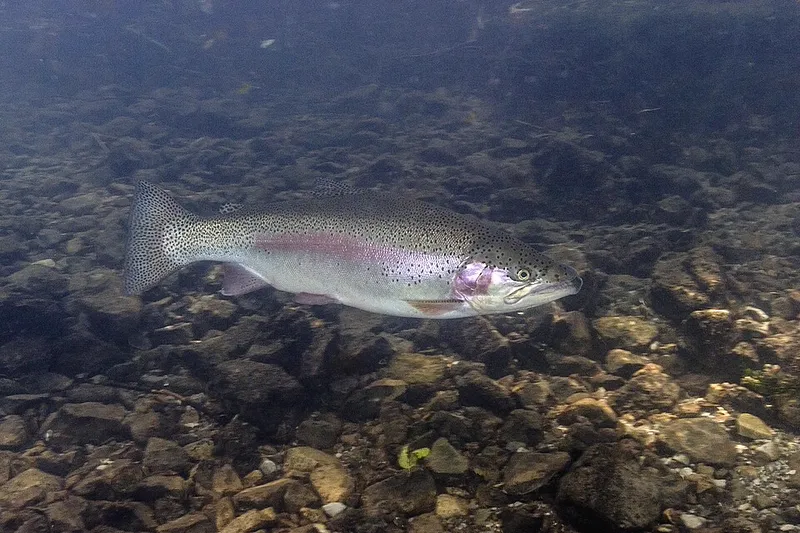
Black spots cover the whole body, fins included, and a broad reddish-purple band runs from the gill cover to the tail; that combination separates it from the white-spotted char and the parr-marked yamame. The name comes from the iridescent sheen it takes on in the breeding season. Native to the west coast of North America, it was brought over from California in 1877 and is now widely farmed.
The mainstay of managed fishing ponds, taken on bait, lures or flies alike. Stocking is heavy, so even beginners tend to land several.
Rainbow Trout: Feed the bait from upstream and let it travel at current speed without tightening the line. Check opening dates and permits.
Waters: Rivers & lakes
Stream bait-fishing starter kit ・ Kit total ¥13,000–35,000
Before buying tackle, confirm the river permit, season and allowed bait and hooks.
Product links may be affiliate links. Prices move, so treat the ranges as a guide.
Food use varies locally. Check harvest rules and water quality, avoid raw consumption and cook thoroughly.
Best eating: March–June
Inland rules are water-specific. Check the fishery cooperative and prefecture for day or annual permits, closed seasons, minimum sizes, tackle, harvest and release rules.
Closed seasons and size limits — how to find the numbers, which differ by prefecture
Seasons and rules vary by place and time. Check current local information before fishing.