Mountain-stream bait fishing from a River / Mountain stream
Sweetfish: Feed the bait from upstream and let it travel at current speed without tightening the line. Check opening dates and permits.
Waters: Rivers & lakes
Fish
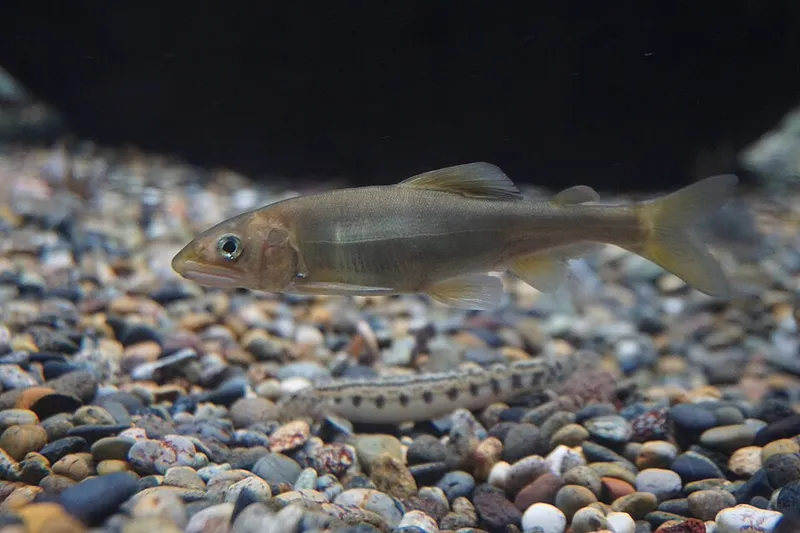
Plecoglossus altivelis ・ アユ科
Months for Sweetfish are a broad Japan-wide guide and shift with region, temperature and conditions; prefer local reports and rules.
A large yellow oval patch just behind the pectoral fin is the giveaway. It scrapes algae off river stones, which gives it a distinctive melon-like scent and the nickname "fragrant fish," leaving grazing marks on the rocks. It moves between river and sea and lives only about a year. Anglers exploit its habit of defending a patch of stones with tomozuri, fishing with a live decoy.
Tomozuri turns the fish's territoriality against it: a live decoy ayu is swum past a feeding rock, and the resident fish that charges it is snagged on trailing hooks. Most rivers open in June, and a day permit from the local fishery co-op is required.
Sweetfish: Feed the bait from upstream and let it travel at current speed without tightening the line. Check opening dates and permits.
Waters: Rivers & lakes
Stream bait-fishing starter kit ・ Kit total ¥13,000–35,000
Before buying tackle, confirm the river permit, season and allowed bait and hooks.
Product links may be affiliate links. Prices move, so treat the ranges as a guide.
Food use varies locally. Check harvest rules and water quality, avoid raw consumption and cook thoroughly.
Best eating: March–June
Inland rules are water-specific. Check the fishery cooperative and prefecture for day or annual permits, closed seasons, minimum sizes, tackle, harvest and release rules.
Closed seasons and size limits — how to find the numbers, which differ by prefecture
Seasons and rules vary by place and time. Check current local information before fishing.