Freshwater lure fishing from a Lake / Pond / Reservoir
Amur Catfish: Retrieve parallel to banks and inflows, changing depth and speed if there is no response. Follow local invasive-fish handling rules.
Waters: Rivers & lakes
Fish
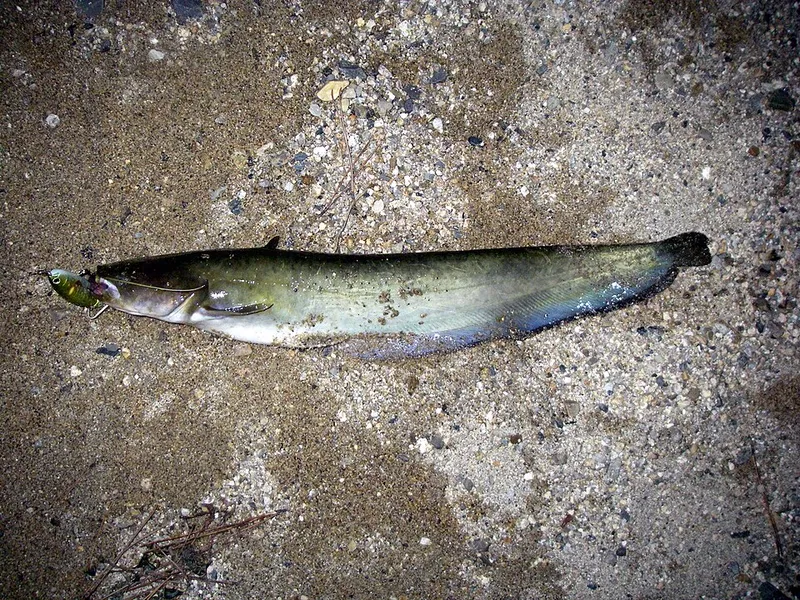
Silurus asotus ・ ナマズ科
Months for Amur Catfish are a broad Japan-wide guide and shift with region, temperature and conditions; prefer local reports and rules.
A big-mouthed, scaleless fish sheathed in slime, growing past 70 cm. Adults carry four barbels, one pair on each jaw; fry start with six and lose a pair as they grow. It hunts small fish and frogs by night in slow lowland rivers and ponds. Japanese folklore has long credited it with sensing earthquakes before they strike.
A night feeder, taken on topwater lures retrieved slowly across rivers and irrigation canals. It pushes into the shallows to spawn from late April through June.
Amur Catfish: Retrieve parallel to banks and inflows, changing depth and speed if there is no response. Follow local invasive-fish handling rules.
Waters: Rivers & lakes
Freshwater lure starter kit ・ Kit total ¥17,000–50,000
First check the permit, lure and hook rules, and handling requirements for invasive fish.
Product links may be affiliate links. Prices move, so treat the ranges as a guide.
This fish is dangerous to handle bare-handed.
Sharp spines
Hard fin spines can puncture skin; do not grip the fish in a bare hand. Reliable primary evidence of venom was not confirmed, so this guide does not label the spines venomous.
Dangerous fish and animals — what to do when you are stung or bitten
Food use varies locally. Check harvest rules and water quality, avoid raw consumption and cook thoroughly.
Inland rules are water-specific. Check the fishery cooperative and prefecture for day or annual permits, closed seasons, minimum sizes, tackle, harvest and release rules.
Closed seasons and size limits — how to find the numbers, which differ by prefecture
Seasons and rules vary by place and time. Check current local information before fishing.