Freshwater lure fishing from a Lake / Pond / Reservoir
Largemouth Bass: Retrieve parallel to banks and inflows, changing depth and speed if there is no response. Follow local invasive-fish handling rules.
Waters: Rivers & lakes
Fish
Micropterus nigricans ・ Centrarchidae (Freshwater Sunfishes)
Months for Largemouth Bass are a broad Japan-wide guide and shift with region, temperature and conditions; prefer local reports and rules.
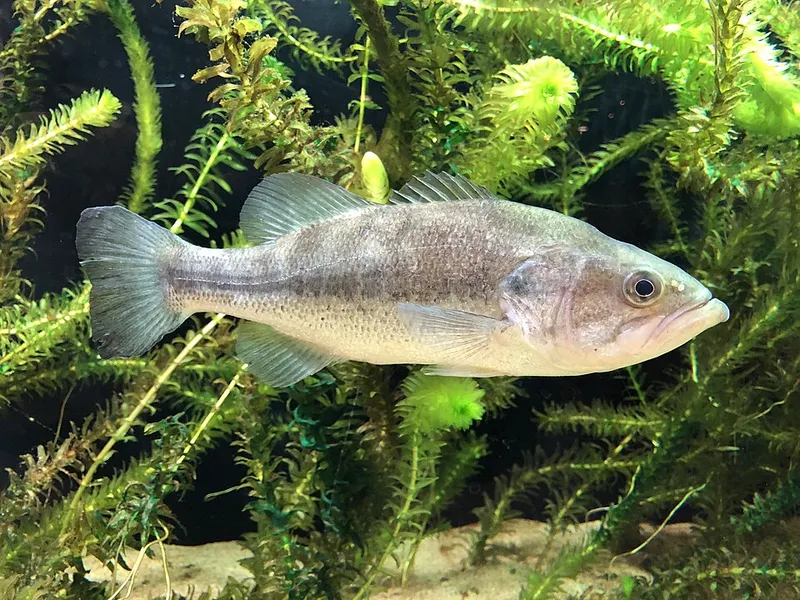
A large North American predator that reaches about 60 cm. The back is greenish brown and a thick, ragged dark band runs down the middle of the flank. The mouth is the giveaway against the smallmouth bass: its corner extends past the rear edge of the eye. First released into Lake Ashi in 1925, it preys on native fish and is now a designated invasive species in Japan.
One of Japan's signature lure targets, worked with soft plastics and hard baits in farm ponds and reservoirs. It is designated an Invasive Alien Species, so moving it alive or releasing it into other waters is prohibited by law.
Largemouth Bass: Retrieve parallel to banks and inflows, changing depth and speed if there is no response. Follow local invasive-fish handling rules.
Waters: Rivers & lakes
Freshwater lure starter kit ・ Kit total ¥17,000–50,000
First check the permit, lure and hook rules, and handling requirements for invasive fish.
Product links may be affiliate links. Prices move, so treat the ranges as a guide.
Food use varies locally. Check harvest rules and water quality, avoid raw consumption and cook thoroughly.
Largemouth Bass is regulated as a designated invasive alien species. Keeping, live transport and release are generally restricted. Local no-release rules and disposal methods vary, so also confirm permits, closed seasons, size and harvest rules.
Closed seasons and size limits — how to find the numbers, which differ by prefecture
Seasons and rules vary by place and time. Check current local information before fishing.